

One small vowel. Two completely different meanings. If you have ever typed “rag” when you meant “rug” or the other way around, you are not alone. These two words trip up English learners, native speakers, and even professional writers. The mix-up is easy to understand since both words are short, both involve fabric, and both appear in everyday conversations about the home.But here is the truth:
A rug and a rag have almost nothing in common beyond their spelling. One belongs on your living room floor. The other belongs under your kitchen sink. Getting them mixed up can completely change the meaning of what you say or write.This guide breaks down everything you need to know about rug vs. rag. You will find clear definitions, real sentence examples, types of each item, common mistakes to avoid, and a simple memory trick to keep them straight for good.
Rug vs. Rag: Quick Comparison Table
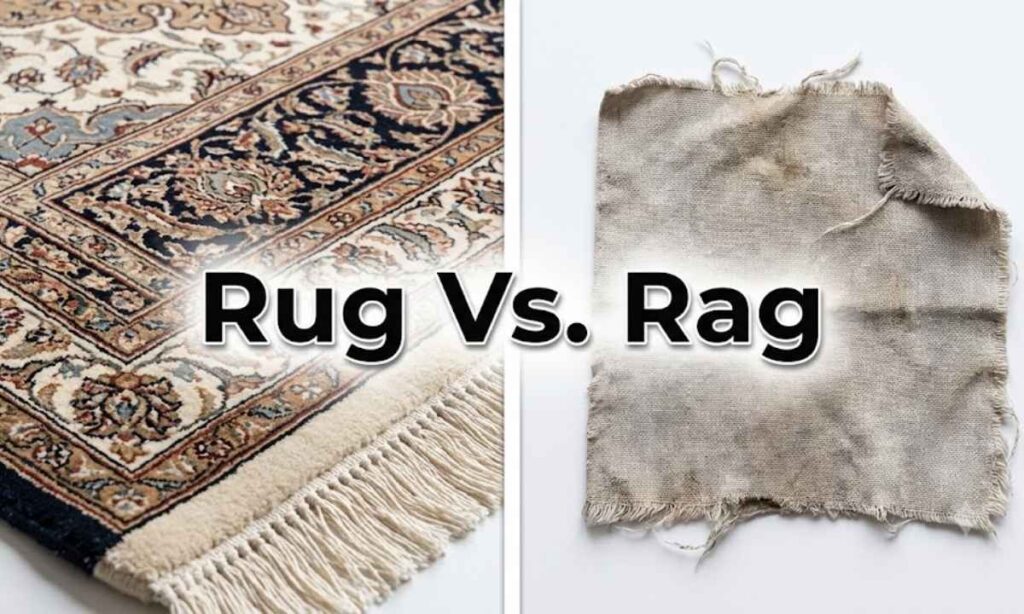
| Feature | Rug | Rag |
| Primary purpose | Floor covering, decoration | Cleaning, wiping, polishing |
| Appearance | Neat, designed, often colorful | Worn, torn, or plain |
| Material | Wool, cotton, synthetic fibers | Old cloth, recycled fabric |
| Location in a home | Living room, bedroom, hallway | Kitchen, garage, under the sink |
| Cost | Varies from affordable to expensive | Usually free or very cheap |
| Lifespan | Years to decades | Short term, often disposable |
| Part of speech | Noun | Noun (also used as a verb informally) |
What Does “Rug” Mean?
A rug is a thick piece of fabric placed on the floor. It adds warmth, comfort, and visual style to a room. Rugs do not cover the entire floor like wall-to-wall carpeting. Instead, they sit in a defined area and serve as a design element.
The word “rug” traces back to Old Norse and Old English roots, where it originally described a shaggy piece of cloth used for warmth. Over centuries, it evolved into the decorative floor covering we know today.
Rugs also appear in popular idioms. “Sweep it under the rug” means hiding a problem instead of solving it. “Pull the rug out from under someone” means removing support without warning.
Common Uses of a Rug
Rugs serve several purposes beyond just looking good. Here are the most common ways people use them:
- Defining spaces in open-plan rooms
- Adding warmth to cold tile or hardwood floors
- Reducing noise and absorbing sound
- Protecting floors from scratches and heavy foot traffic
- Creating a focal point in a living room or bedroom
- Adding color, texture, and personality to a neutral space
Types of Rugs Found in Homes
Rugs come in many styles, materials, and sizes. These are the most popular types:
- Area rugs: Large rugs placed in the center of a room, often under furniture
- Runner rugs: Long and narrow, used in hallways and entryways
- Accent rugs: Small rugs used to highlight a specific spot, such as beside a bed
- Persian or Oriental rugs: Intricately woven rugs with traditional patterns, often quite valuable
- Shag rugs: Deep-pile rugs with a soft, fluffy texture, popular in bedrooms
- Jute or sisal rugs: Made from natural plant fibers, great for casual or eco-friendly spaces
- Faux fur rugs: Soft, budget-friendly alternatives to animal-skin rugs
What Does “Rag” Mean?
A rag is a piece of old, worn, or torn cloth used mainly for cleaning. It has no decorative purpose. Its entire job is practical. Rags wipe up spills, absorb grease, polish surfaces, and handle dirty tasks that you would never want to do with a nice piece of fabric.
The word “rag” comes from Middle English “ragge,” which described a torn or ragged piece of cloth. In informal English, “rag” can also refer to a low-quality newspaper. In music history, it connects to ragtime, the upbeat piano style popular in the late 1800s. However, in everyday home use, it almost always means a cleaning cloth.
When someone says a person is “dressed in rags,” it means they are wearing very old, tattered clothing. This informal use is common in both speech and writing.
Common Uses of a Rag
Rags handle the dirty work in any home or workplace. Here is what people use them for:
- Wiping up spills on countertops and floors
- Polishing furniture, glass, and wooden surfaces
- Removing grease from car engines or mechanical parts
- Dusting shelves, baseboards, and blinds
- Applying and removing paint or varnish
- Cleaning bathroom fixtures and tiles
Different Types of Cleaning Rags
Not all rags are the same. Different types work better for different tasks:
- Microfiber rags: The most popular type today. They trap dust and dirt without scratching surfaces. Great for glass and electronics.
- Cotton rags: Made from old T-shirts or towels. Soft, absorbent, and washable. Ideal for general household cleaning.
- Shop rags: Thick and durable. Used in garages and workshops to absorb oil, grease, and chemicals.
- Cheesecloth rags: Lightweight and loosely woven. Used for polishing delicate surfaces or straining liquids in cooking.
- Disposable cleaning cloths: Single-use rags used in hospitals, restaurants, and commercial kitchens for sanitation reasons.
Rug vs. Rag: Key Differences Explained
The most important difference between a rug and a rag is purpose. A rug is meant to be seen and enjoyed. A rag is meant to be used and dirtied. Here is a breakdown of their key differences:
Purpose: A rug decorates and protects a floor. A rag cleans and absorbs.
Appearance: Rugs are designed with patterns, colors, and textures meant to look attractive. Rags are plain, old, and often torn.
Material: Rugs are made with quality fibers like wool, cotton, or synthetic blends, chosen for durability and looks. Rags are usually made from recycled or worn-out fabric.
Placement: A rug sits on your floor as a permanent fixture of a room. A rag lives in a bucket, drawer, or under a sink and comes out only when needed.
Value: A good rug can cost hundreds or even thousands of dollars. A rag costs almost nothing, since most people make them from old clothing or towels they no longer use.
Longevity: Rugs are made to last years or even decades. Rags wear out quickly and are often thrown away after heavy use.
Why People Often Confuse Rug and Rag
The confusion between rug and rag is extremely common, and for good reason. Here is why it happens so often:
- The two words differ by only one vowel. “Rug” uses a short “u” sound. “Rag” uses a short “a” sound. In fast, casual speech, those vowel sounds can blur together, especially for non-native English speakers.
- Autocorrect on phones and computers also contributes to the problem. Both words exist in standard dictionaries, so spellcheck will not flag either one as wrong. It cannot detect the contextual mistake.
- Another reason is that both words involve cloth and household settings. Someone thinking about home chores might reach for either word without carefully considering which one fits.
- Finally, the words rhyme. Bag, tag, nag, wag all end in the same sound as rag. And bug, mug, tug, hug all rhyme with rug. That phonetic overlap keeps both words bouncing around in the brain at the same time.
Real-Life Examples of Rug and Rag in Sentences
Seeing these words in real sentences is the fastest way to lock in the difference. Read through these examples carefully:
Rug in sentences:
- She placed a large wool rug under the dining table to protect the hardwood floors.
- The nursery had a soft, colorful rug that made the room feel warm and playful.
- He pulled the rug out from under the deal by backing out at the last minute.
- A Persian rug hung on the wall as a piece of art in the gallery.
Rag in sentences:
- She grabbed a damp rag from the sink and wiped the counter clean.
- The mechanic kept a stack of oily rags near the engine bay for quick cleanups.
- He tore an old T-shirt into rags to use for polishing the furniture.
- Use a microfiber rag to clean the laptop screen without scratching it.
Common Mistakes to Avoid When Using Rug and Rag
These are the most frequent errors people make when using these two words:
Mistake 1: Using “rag” in a decorating context
Wrong: I just bought a beautiful rag for the living room. Right: I just bought a beautiful rug for the living room.
Mistake 2: Using “rug” in a cleaning context
Wrong: Use the rug to wipe up that spill. Right: Use the rag to wipe up that spill.
Mistake 3: Mixing them up in product listings
This happens often in online shopping. Writing “cleaning rugs” or “decorative rags” creates serious confusion for buyers. Always double check before publishing product names or descriptions.
Mistake 4: Relying on autocorrect
Autocorrect will not catch rug vs. rag mistakes. Both words pass spellcheck. You must read the sentence carefully to make sure you used the right one.
Rug, Rag, and Rag Rug: Understanding the Connection
Here is where things get interesting. There is actually a product called a “rag rug,” and it combines both words for a good reason.
A rag rug is a floor covering made from strips of old cloth. Instead of using new yarn or high-quality fibers, crafters weave, braid, or knot together pieces of fabric scraps and old clothing. The result is a colorful, eco-friendly, and affordable floor mat.
Rag rugs have existed for centuries. Before modern manufacturing, families could not afford imported wool carpets. They saved torn clothes and worn-out towels and turned them into something useful. Today, rag rug crafting is celebrated as a sustainable DIY project.
So while a rug and a rag serve very different purposes, they can literally come together in a single product. A rag rug starts as rags and becomes a rug. It is a perfect example of how these two words exist in the same world even though they usually describe very different things.
Easy Trick to Remember the Difference Between Rug and Rag
Here is a simple memory trick that works every time:
“U” is for Under your feet. “A” is for After a mess.
A rug has the letter U in it. Think of laying it under your feet for comfort. A rag has the letter A in it. Think of reaching for it after something spills.
Another way to remember:
Rug = room. Rag = rubbing.
A rug lives in a room and makes it look nice. A rag is what you use for rubbing and scrubbing.
You can also use a visual picture. Imagine a cozy room with a soft rug under a coffee table. Now imagine a bucket of soapy water with a dirty cloth hanging over the edge. The first image is a rug. The second is a rag. Hold those two images in your mind and you will never confuse them again.
Final Thoughts
Rug and rag are two short words that look and sound similar, but they belong in completely different parts of your home and your vocabulary. A rug decorates, protects, and warms your floor. A rag cleans, absorbs, and handles the dirty work you would rather not think about.The next time you write or say either word, pause for just one second.
Ask yourself: am I talking about something that makes a room look better, or something I use to clean up a mess? That one question will point you to the right word every single time.Mastering small distinctions like this one strengthens your writing and makes your communication sharper and more professional. A single wrong vowel can completely change what you mean. Now that you know the difference, it will never slow you down again.

Alex is a passionate grammar expert and content writer at LexiGrammar with 4+ years of experience helping readers improve their English skills.He creates clear, engaging, and easy-to-follow grammar guides designed for students, writers, and language learners worldwide.