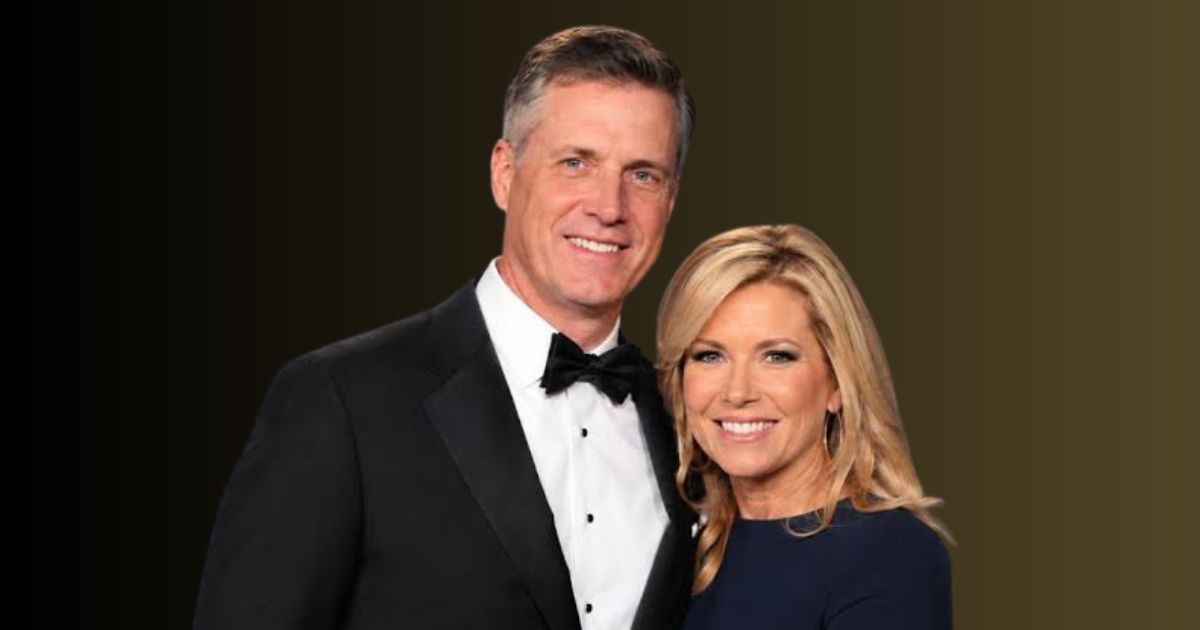
Lachlan Murdoch is a media executive and Executive Chair and CEO of Fox Corporation, best known for steering the company through the FOX One streaming launch and the Tubi acquisition. David Cordani is a healthcare executive who spent seventeen years as CEO of The Cigna Group, best known for turning Evernorth into a pharmacy and care delivery powerhouse.
Both men built lasting control over sprawling companies, just in wildly different industries. This article compares their paths, their strategies, and what other leaders can take from each one.
Profile Summary Table
Here’s a side by side look at both executives before we dig into the details.
| Detail | Lachlan Murdoch | David Cordani |
| Full Name | Lachlan Keith Murdoch | David M. Cordani |
| Born | September 8, 1971, Wimbledon, London | February 10, 1966, Waterbury, Connecticut |
| Age | 54 | 60 |
| Height and Weight | Not publicly disclosed | Not publicly disclosed |
| Education | Princeton University, BA in Philosophy | Texas A&M University (BA), University of Hartford (MBA) |
| Current Role | Executive Chair and CEO, Fox Corporation | Executive Chair, The Cigna Group |
| Years Leading Company | CEO since 2019 (Fox Corp); decades in Murdoch family media | CEO from 2009 to July 2026 |
| Spouse | Sarah O’Hare | Sherry Cordani |
| Children | 3 | 2 |
| Net Worth | Estimated at roughly $2.1 billion USD | Estimated $182 million to $217.9 million |
| Industry | Media and entertainment | Healthcare and insurance |
| Social Handles | Not publicly disclosed | Not publicly disclosed |
Early Life Background and Foundations of Leadership
Lachlan Murdoch’s early life started in London but mostly played out in New York City. His father ran the New York Post at the time, so young Lachlan grew up around newsrooms and printing presses. He actually worked weekend shifts cleaning press equipment as a teenager. That hands on exposure shaped how he thinks about media operations today. He later studied philosophy at Princeton University and graduated in 1994.
David Cordani’s early life looked nothing like that. He grew up in a working class household in Waterbury, Connecticut. Money was tight, and nothing was handed to him. He earned his undergraduate degree at Texas A&M University, then completed an MBA at the University of Hartford while working. His first job wasn’t in healthcare at all. He started in accounting, then pivoted toward the insurance world because he wanted a career that touched people’s daily lives.
Two very different starting points. One kid grew up inside a media dynasty. The other built his own path from scratch. Yet both ended up running companies worth hundreds of billions of dollars. That says something about how many roads actually lead to the top.
Entering the Corporate Arena: Early Career Milestones
Right after Princeton, Lachlan Murdoch moved to Australia in 1994 to run Queensland Newspapers, part of the family’s News Corp empire. Within a few years he became chairman and CEO of News Limited, which handled the company’s Australian publishing assets. That early role gave him operational credibility that went beyond his last name. He wasn’t just watching from a boardroom. He was running a real business with real deadlines.
David Cordani joined Cigna in 1991, fresh from an accounting firm. Instead of climbing straight up one ladder, he rotated through human resources, technology, investment operations, and finance. That rotation gave him something most executives never get: a full picture of how every part of a massive organization actually works. When he eventually took the top job, he already understood the company from the inside out.
Both men built their early career the hard way, through operational roles rather than pure strategy meetings. That grounding shows up later in how each one runs his company.
The Rise to Top Executive Power
Lachlan Murdoch’s climb to Fox Corporation CEO wasn’t a straight shot. He actually resigned from News Corp in 2005 after internal disagreements with the company’s direction. Years later he returned to help engineer the spinoff of Fox Corporation following the sale of most of 21st Century Fox to Disney in 2019. That Disney deal reshaped the entire Murdoch media empire and set the stage for Fox Corporation as it exists today. He now holds a contract extension that keeps him as CEO through 2030.
David Cordani’s path looked far more linear. He became Cigna’s president in 2008, then CEO in 2009 at just 42 years old. He added the chairman title in 2022. Over his 17 year run, he grew the company from $18 billion in annual revenue to roughly $275 billion. That kind of growth doesn’t happen by accident. It happens through disciplined, repeated strategic bets over nearly two decades.
Strategic Transformations in Media and Broadcasting
Fox Corporation strategy under Lachlan Murdoch centers on one core idea: live content resists streaming disruption in a way scripted entertainment simply cannot. News and sports have to be watched as they happen. You can’t binge a live football game a week later.
A few moves show how Murdoch put that idea into practice:
- Acquiring Tubi in 2020, now one of the most successful free ad supported streaming platforms in the United States
- Launching FOX One, a direct to consumer streaming app built around Fox News, Fox Sports, and FOX Entertainment
- Growing advertising revenue even as political ad spending swings wildly from year to year
This Fox streaming strategy gives the company an edge that pure entertainment competitors often lack. When live sports and breaking news anchor your business, streaming disruption becomes less of a threat and more of an opportunity.
Revolutionizing Global Health Services and Delivery
David Cordani pushed Cigna far beyond traditional health insurance. His biggest strategic bet was expanding Evernorth Health Services, the company’s pharmacy and care delivery arm, into a business nearly as important as insurance itself.
Key parts of the Cigna healthcare strategy include:
- Acquiring Express Scripts in 2018 to build an integrated pharmacy benefits arm under Evernorth
- Gradually reducing exposure to the individual insurance marketplace
- Selling off the Cigna Medicare Advantage business in 2025 to concentrate on employer sponsored plans and pharmacy benefits
That shift moved Cigna toward higher margin, more predictable revenue streams. It also repositioned the company as a healthcare services provider first and an insurer second, a subtle but meaningful change in identity.
Navigating Corporate Crisis Management and Public Scrutiny
Both men have taken real heat. Murdoch has managed Fox News through defamation litigation and advertiser boycotts tied to controversial programming, all while keeping the network’s ratings dominant. That’s no small feat. Plenty of media companies fold under half that pressure.
Cordani testified before Congress in January 2026 on health insurance affordability. Lawmakers pressed him on claim denials and rising healthcare costs, two topics that generate intense public scrutiny for any insurance executive. He answered the questions directly instead of dodging them, a choice that reflects his broader leadership philosophy.
Neither crisis derailed the underlying business. Fox kept its ratings lead. Cigna kept growing. That kind of institutional resilience doesn’t happen overnight. It gets built over years of steady execution.
The Role of Leadership Philosophy and Management Style
Lachlan Murdoch’s management style favors a lean executive structure. He lets business unit leaders handle day to day operations while he focuses on long term strategic bets. This isn’t a hands off approach exactly. It’s more a bet that skilled people close to the work make better daily decisions than a distant executive ever could.
David Cordani’s leadership philosophy centers on what colleagues call purpose driven leadership. He ties corporate strategy directly to measurable improvements in customer affordability and health outcomes. He’s also known for intense personal discipline. He completed more than 125 triathlons while running one of the largest health services companies in the country. That’s not a random detail. It reflects a man who treats endurance and consistency as core values, both in fitness and in business.
Key Mergers, Acquisitions, and Capital Allocation Strategies
| Executive | Major Deal | Year | Strategic Purpose |
| Lachlan Murdoch | Tubi acquisition | 2020 | Build a free ad supported streaming presence |
| Lachlan Murdoch | Fox Corp spinoff from the Disney deal | 2019 | Focus the company on news and sports |
| David Cordani | Express Scripts acquisition | 2018 | Create an integrated pharmacy benefits arm through Evernorth |
| David Cordani | Medicare Advantage divestiture | 2025 | Concentrate on core commercial and pharmacy business |
The pattern here matters more than any single deal. Both executives trimmed businesses that no longer fit their long term vision, then reinvested aggressively in growth areas. That’s capital allocation done with real discipline, not just headline chasing.
Adapting to Technological Disruption and Digital Shift
Fox Corporation digital transformation runs through Tubi and FOX One, treating streaming as something that complements broadcast rather than replaces it. Digital distribution gets folded into the existing business instead of cannibalizing it.
Cigna’s approach looks different but follows a similar logic. The company leans on artificial intelligence and data analytics within Evernorth to simplify claims processing and personalize care recommendations. Automated claims handling alone has cut processing time for millions of routine requests.
Both companies treat technology as a tool for operational efficiency, not a wholesale reinvention of the core business. That’s a quietly important distinction. Plenty of companies chase tech trends for their own sake. Neither Murdoch nor Cordani does that.
Regulatory Environment and Public Policy Strategy
Media and healthcare rank among the most heavily regulated industries in the United States. Fox operates under FCC broadcast rules along with constant scrutiny over news content standards. Every controversial segment invites regulatory attention, whether the company wants it or not.
Cigna answers to state insurance regulators, federal healthcare law, and increasingly vocal congressional committees examining pricing transparency. Both executives have testified publicly in front of lawmakers, which has basically become a routine part of running a company this size in 2026.
Philanthropy, Community Engagement, and Personal Initiatives
David Cordani and his wife Sherry established a scholarship at Texas A&M that supports military veterans and their spouses. He also volunteers as a running guide for wounded veterans through Achilles International, tying his personal fitness discipline to genuine community service.
Lachlan Murdoch and his wife Sarah have supported causes including LGBTQ community museums and breast cancer research advocacy. Their giving reflects a pattern common among executives at this level: targeted, personal causes rather than broad, scattershot donations.
Future Succession and Long Term Corporate Vision
This is where the two paths split completely. Murdoch just signed a contract extension keeping him as Fox’s CEO through 2030, cementing his control following a family settlement with his father Rupert Murdoch. He chose continuity through extension, staying firmly in the driver’s seat.
Cordani took the opposite route. He retired as Cigna’s CEO effective July 1, 2026, and became Executive Chair. Longtime insider Brian Evanko, previously president and COO, now runs the company as CEO. Cordani chose continuity through succession, handing the wheel to someone he trained internally.
Parallel Lessons from Two Corporate Leaders
| Lesson | Lachlan Murdoch | David Cordani |
| Focus strategy | Concentrate on live content | Concentrate on pharmacy and care delivery |
| Handle criticism | Stay operationally steady under scrutiny | Testify directly and address concerns publicly |
| Plan succession | Extend and consolidate personal control | Step back and hand off to a trusted insider |
| Build loyalty | Long tenure across family businesses | Promote from within after decades of service |
The biggest takeaway from this business leadership comparison: sustainable leadership isn’t one formula. Murdoch chose continuity through extension. Cordani chose continuity through succession. Both protect what they built, just through completely different means.
Fast Facts
- Lachlan Murdoch was born September 8, 1971, in Wimbledon, London
- David Cordani was born February 10, 1966, in Waterbury, Connecticut
- Murdoch studied philosophy at Princeton University
- Cordani holds an MBA from the University of Hartford
- Murdoch’s Fox Corporation contract runs through 2030
- Cordani led Cigna for 17 years, from 2009 to 2026
- Cigna’s revenue reportedly grew from $18 billion to about $275 billion under Cordani
- Murdoch’s net worth is estimated at roughly $2.1 billion USD
- Cordani completed more than 125 triathlons while serving as CEO
- Brian Evanko succeeded Cordani as Cigna CEO in July 2026
Frequently Asked Questions
Who is Lachlan Murdoch?
He’s the Executive Chair and CEO of Fox Corporation and the eldest son of media mogul Rupert Murdoch.
Who is David Cordani?
He’s the Executive Chair of The Cigna Group, having served as its CEO from 2009 until July 2026.
Is David Cordani still Cigna’s CEO?
No. He stepped down as CEO on July 1, 2026, and Brian Evanko now holds that role.
What company does Lachlan Murdoch lead?
He leads Fox Corporation, home to Fox News, Fox Sports, Tubi, and FOX Entertainment.
What is Cordani’s biggest achievement at Cigna?
He grew the company’s annual revenue from $18 billion to roughly $275 billion over his 17 year tenure.
How do Murdoch and Cordani’s leadership styles differ?
Murdoch delegates daily operations and focuses on long term bets, while Cordani ties strategy directly to measurable outcomes and stays personally involved in public facing accountability.
Conclusion
Lachlan Murdoch and David Cordani prove that great leadership looks different depending on the industry and the moment. Murdoch doubled down on live programming and secured his seat through 2030.
Cordani spent nearly two decades reshaping Cigna, then stepped aside on his own terms. Their stories offer a simple reminder: real leadership isn’t about staying forever. It’s about knowing exactly what your company needs next.
Alex is a passionate grammar expert and content writer at LexiGrammar with 4+ years of experience helping readers improve their English skills.He creates clear, engaging, and easy-to-follow grammar guides designed for students, writers, and language learners worldwide.