

Have you ever stopped mid-sentence wondering whether to write become or became? You’re not alone. This is one of the most searched grammar questions online and for good reason.
Both words carry the same core meaning, yet using the wrong one can confuse your reader or make your writing sound off. This guide clears everything up with simple rules, real examples, and handy memory tricks.
Understanding the Basics of Become vs Became
English verbs shift their form depending on when something happens. “Become” is an irregular verb, which means it does not follow the standard “-ed” rule for past tense. Instead of “becomed,” the past form is “became.”
Here is the full verb form chart at a glance:
| Form | Name | Example |
| become | Base / Infinitive | I want to become a writer. |
| becomes | Simple Present (3rd person singular) | She becomes nervous before exams. |
| became | Simple Past | He became famous overnight. |
| become | Past Participle | They have become close friends. |
| becoming | Present Participle | The city is becoming a tech hub. |
The base form “become” and the past participle are identical — and that is where most of the confusion begins.
The Base Form “Become”: What It Really Means
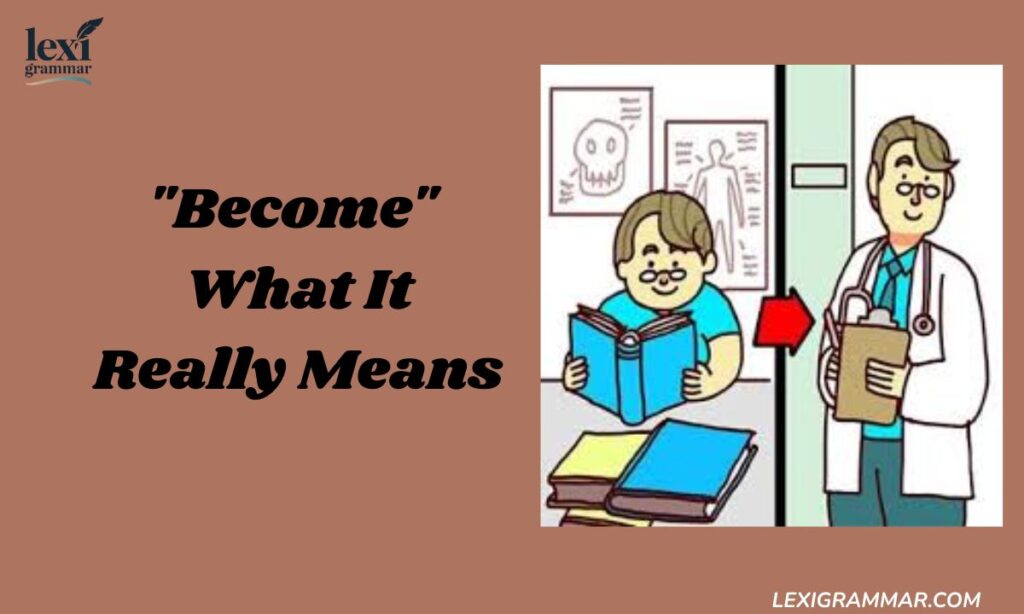
“Become” means to start being something, to grow into something, or to change from one state to another. It describes a process — not just a single moment.
Examples:
- I want to become a better writer.
- People become more patient as they age.
- Roads become slippery in winter.
Use “become” whenever you are talking about the present, the future, or any situation requiring the base verb form (after modal verbs like will, can, would, should).
Become Verb Forms
Here is a quick breakdown of all verb forms of “become”:
- V1 (Base Form): become
- V2 (Simple Past): became
- V3 (Past Participle): become
- V4 (Present Participle / Gerund): becoming
- V5 (Third Person Singular Present): becomes
Notice that V1 and V3 are the same word. This trips up many learners, especially when building perfect tense sentences.
Has Become or Has Became?
This is one of the most common grammar errors in English.
The correct form is always “has become.”
❌ She has became more confident. (Wrong) ✅ She has become more confident. (Correct)
The reason: “has” and “have” are auxiliary (helping) verbs used in the present perfect tense. They always require the past participle, which for this verb is “become” — not “became.”
“Became” is a standalone simple past verb. It does not work with “has” or “have” under any circumstance.
The Simple Past Form “Became”: Understanding Its Purpose
“Became” is the simple past tense of “become.” You use it when a transformation has already happened and is completely finished.
Think of “became” as closing a chapter — whatever changed, changed fully and is done.
Examples:
- She became a designer after finishing her degree.
- The weather became colder overnight.
- That small idea became a global company.
- He became more confident last year.
A useful test: if you can naturally add words like yesterday, last year, in 2018, or ago to your sentence, “became” is almost certainly the right choice.
Become vs Becomes: The Simple Present Tense Difference
Both “become” and “becomes” are present tense, but they follow subject-verb agreement rules.
| Subject | Correct Form | Example |
| I | become | I become anxious in crowds. |
| You | become | You become stronger with practice. |
| We | become | We become better teammates over time. |
| They | become | They become restless by noon. |
| He / She / It | becomes | She becomes nervous before speeches. |
| Singular Noun | becomes | The coffee becomes bitter when overbrewed. |
The rule is simple: add an “-s” only for third person singular subjects (he, she, it, or any singular noun).
Present Perfect Tense: “Has Become” and “Have Become”
The present perfect tense connects something that happened in the past to its effect today. It is built with has/have + past participle (become).
Use “has become” with singular third person subjects:
- The city has become safer over the years.
- My dog has become calmer lately.
Use “have become” with plural subjects or I/you/we/they:
- We have become more aware of our health.
- You have become a confident speaker.
- They have become good friends.
The key difference between “has/have become” and “became” comes down to relevance. “Became” says it’s over and done. “Has/have become” says the change happened — and still matters right now.
The Subtleties of “Would Become”
“Would become” is used in three specific situations:
- Hypothetical or conditional situations:
- If she had worked harder, she would become a partner.
- Future in the past (describing what was expected):
- Nobody knew he would become the team’s best player.
- Repeated past habits (less common, more literary):
- Every evening, the sky would become a canvas of color.
Always use the base form “become” after “would” — never “became.”
Comparison Table: Become vs Became vs Becomes vs Has Become vs Have Become
| Form | Tense | Subject | Example |
| become | Present / Infinitive | I, you, we, they | I want to become a teacher. |
| becomes | Simple Present | He, she, it | He becomes happy easily. |
| became | Simple Past | All subjects | She became a doctor in 2015. |
| has become | Present Perfect | He, she, it | It has become a global trend. |
| have become | Present Perfect | I, you, we, they | We have become closer friends. |
Memory Tricks to Never Confuse Become vs Became Again
Trick 1 — The “-d” rule: Most simple past verbs end in “-d” or “-ed.” “Became” ends in “-d” — that is your signal it lives in the past.
Trick 2 — The time word test: Drop a time word like yesterday or last year into your sentence. If it fits naturally → use “became.” If it sounds odd → use “become.”
Trick 3 — The helper verb check: If your sentence has has, have, or had before the verb, always use “become.” Helpers + became = always wrong.
Trick 4 — The “still true?” test: Ask yourself: “Is this change still relevant today?” If yes → “has/have become.” If it’s purely old history → “became.”
Mini Case Study: How Grammar Changes Meaning
Read these two sentences carefully:
She became a respected doctor. She has become a respected doctor.
Both describe the same transformation. But the first sentence tells you it happened in the past — full stop. The second tells you she is still a respected doctor today, and that status remains in place.
In a eulogy, you would say “She became a respected doctor.” In a LinkedIn recommendation, you would say “She has become a respected doctor.”
Same words. Different timelines. Different impact. That is why getting this right actually matters.
Frequently Asked Questions
Is “has became” ever correct?
“Has became” is always incorrect. Use “has become” in the present perfect tense.
What is the past participle of “become”?
The past participle is “become” — the same as the base form.
Can I use “became” after “will”?
No. Always use the base form: “will become,” never “will became.”
What is the difference between “became” and “has become”?
“Became” refers to a completed past event. “Has become” connects a past change to the present moment.
Is “they have became” correct?
No. The correct form is “they have become.”
When should I use “becomes” instead of “become”?
Use “becomes” only with he, she, it, or singular noun subjects in simple present tense.
Does the rule change in British vs American English? No.
The spelling and grammar rules for become and became are identical in both varieties of English.
Conclusion
Mastering become vs became is less about memorizing grammar charts and more about understanding time. Ask yourself: is the change happening now, or did it finish in the past? Once that becomes second nature, the right form follows automatically.
To recap use become for the present, future, and with helping verbs. Use became for completed past events. Use has/have become when that past change still holds weight today. Keep these rules in mind, practice them in your own writing, and you will notice the difference immediately.
Good grammar does not just make you look polished. It makes your meaning unmistakably clear.

Alex is a content creator passionate about sharing ideas that inspire, inform, and connect with readers. His work blends practical insights with a touch of creativity, making content engaging and easy to understand.